Ground moisture rises through concrete as vapor. On an unsealed slab it reaches the surface, condenses, and shows up as dampness or “sweat” — and it never stops on its own, because the ground never dries out. A penetrating sealer fills the pores and blocks the vapor path permanently. Start with Bone Dry Original — and if you’re not sure the slab is the source, run the 48-hour test below first.
FAQ
FAQs from Bone Dry Products
Diagnosing The Problem
Tape a 2×2-foot square of plastic sheeting to a dry patch of concrete and leave it for 48 hours. Beads of moisture underneath mean vapor is rising through the slab — a faulty or missing vapor barrier — and sealing is the fix. Bone dry under the plastic means the moisture is coming from the room’s humidity, and ventilation is the fix. Beads? Seal it with Original or Plus.
That smell is usually organic: mold, mildew, and odor-causing bacteria growing in the pores of a damp slab, fed by moisture rising from below. Kill the moisture supply and growth collapses. Bone Dry Plus seals the slab permanently and carries antimicrobial technology in the formula — it’s the product we tag for basements with moisture problems.
Four different failures, one shared cause: moisture vapor rising through unsealed concrete. It emulsifies and weakens the water-, latex-, and acrylic-based adhesives under flooring, and feeds growth beneath non-permeable coverings. Replacing the flooring without sealing the slab restarts the same clock. Seal first with Original, Plus, or Pro — then floor it once.
CMU block is pervious by design — it uses less cement, which leaves wide interstitial gaps that drink groundwater. Bone Dry sealers work by reacting with alkali, and block doesn’t carry enough to feed the reaction. The fix is a two-step system: Bone Dry Block Wall deposits the alkali, then Original or Plus reacts with it to form a permanent moisture seal inside the block itself.
Choosing The Right Product
A quick map: standard slab under flooring at home or in the garage — Original. Mold-prone basement or hygiene-critical facility — Plus. Large commercial pour with a warranty program — Pro. Residential driveway, patio, or sidewalk — Driveway Sealer. Commercial exterior flatwork and parking structures — Structural Sealer . Not sure? Call us with your situation — 262-694-9748.
The seal is identical — the same permanent penetrating vapor barrier at the same coverage. Plus adds antimicrobial technology built into the formula, preventing mold, mildew, and odor-causing bacteria in the pores of the slab. Choose Plus wherever growth carries a cost: basements with moisture problems, healthcare, food production, and other hygiene-critical spaces.
Two routes to the same dry slab. Pro is sprayed on the fresh slab at placement — no batch-plant coordination, 25-year warranty. Pro Admix goes into the load at the batch plant, so the concrete is poured already waterproofed through every cubic inch — zero site labor, and a lifetime flooring and roofing replacement warranty. Both eliminate onsite moisture testing.
Standard poured concrete: straight to sealer. Block Wall is required only on pervious substrates — CMU block, shotcrete, gunite, and extremely porous concrete — where it deposits the alkali the sealer needs to react. Bone Dry Block Wall is always used with Original or Plus, never alone.
No — penetrating concrete sealers are the wrong chemistry for gypsum, and our own Pro specification prohibits it. Gypsum gets its own purpose-built product: Bone Dry Pro Gyp-Cap, a membrane-forming coating that handles up to 100% relative humidity, locks down gypsum dusting, takes foot traffic in as little as 60 minutes, and needs no primer before flooring adhesives.
No — and we’d rather tell you that than sell you a pail. Sealers break down the petroleum base of asphalt. Bone Dry products are for concrete and cement-based surfaces only. If your driveway is concrete, Bone Dry Driveway Sealer is exactly the product: penetrating, permanent, dries clear, and maintains your concrete’s slip resistance.
Yes, at either stage of the structure’s life. For new pours, our CI Admixture goes into the mix and inhibits corrosion from day one. For existing structures, Corrosion Stop is a migrating inhibitor sprayed on the surface that travels to the embedded steel. Chloride attack on rebar is how parking structures die early — both products exist to prevent it.
Before You Apply
Test it: place a few water droplets on the surface. If they don’t penetrate within 2–3 minutes, the pores are closed and a penetrating sealer can’t get in. Etch-A-Crete opens the pores with a spray-on etch — no acid burn, no grinding — and the sealer absorbs properly.
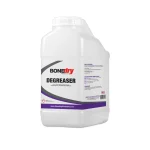
No — oils block penetration, so the sealer can’t reach the concrete beneath the stain. Clean first with Bone Dry Degreaser , a low-foaming industrial concentrate that dilutes to the job (1:16 for light soil up to 1:2 for carbonized buildup), then seal.
Slabs where asphaltic (black mastic) adhesives have been chemically abated are exactly what Bone Dry Pro Encapsulator was built for: a single-component coating that locks down the residue and eliminates hazardous grinding. Bare concrete without mastic history goes to Bone Dry Pro instead.
Penetrating sealers can’t pass through paint or existing coatings — the surface must be clean and porous. On remodels that means a skim coat over the old coating, or mechanical profiling (diamond grinding or shot blasting) to bare concrete first. One note on coatings: EM Coating is a stand-alone product — it goes on bare, clean, dry concrete and is not compatible with Bone Dry sealers.
Application And Results
A standard pressurized garden sprayer — pump or battery-powered, with a wide fan tip. That’s the whole toolkit for most products, indoors or out, which is why our sealers are genuinely DIY-friendly. Product pages carry the specifics (rollers for stamped concrete, dilution for the Degreaser, and so on).
Bone Dry Original and Plus dry in 18–24 hours before finished flooring goes down, or 6 hours with the Quick Dry option — it ships premixed in your pail with no change to how you apply. Bone Dry Pro dries in approximately 6 hours; 12 hours or overnight is recommended before flooring. If efflorescence appears once the slab is dry, a light wet-mop clears the alkali and lime the sealer brings up, then you’re ready to floor.
No. Bone Dry penetrating sealers work inside the slab — the concrete looks unchanged, and outdoor products like Driveway Sealer dry completely clear while maintaining your concrete’s slip resistance, unlike acrylic or epoxy film sealers that add gloss and can get slick when wet.
We’re headquartered in Wisconsin — freeze-thaw isn’t a test condition for us, it’s the parking lot. Water that can’t enter the slab can’t expand inside it, which is why sealed exterior concrete resists freeze-thaw damage, salt penetration, and the cracking and spalling they cause. For homes, that’s Driveway Sealer; for commercial exteriors and parking structures, Structural Sealer .