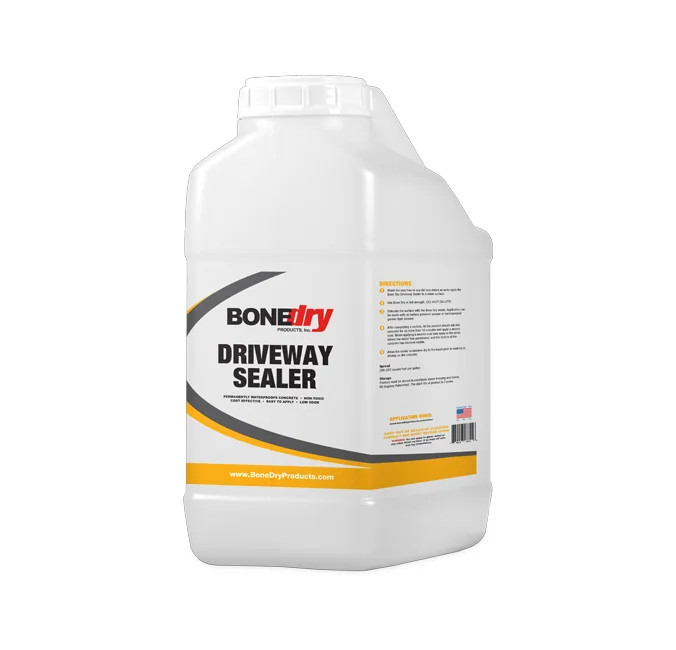
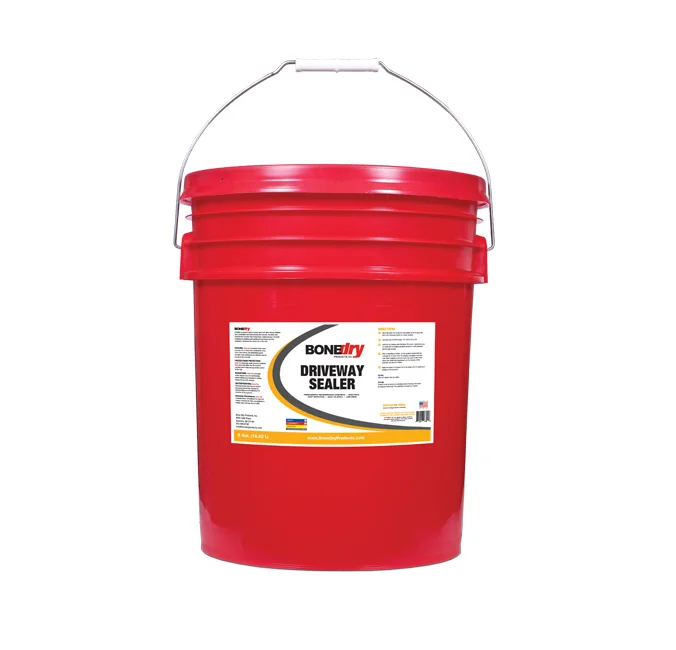
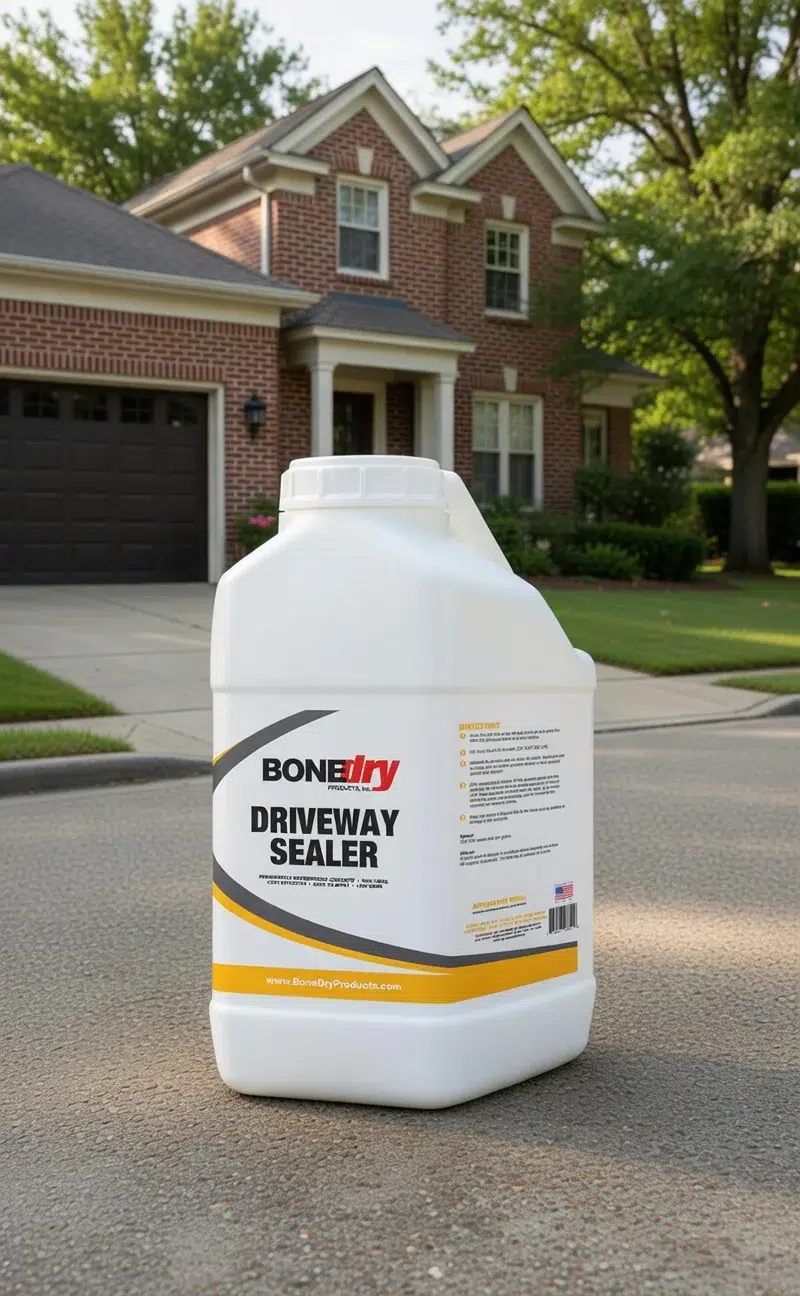
Bone Dry Driveway Sealer
Price range: $70.00 through $225.00
Bone Dry Driveway Sealer is a specially made concrete sealer for outdoor applications. Great for patios, driveways, sidewalks, and other outdoor concrete slabs.
Use
- Outdoor
Coverage
- 250-300 square feet per gallon
Product Info
- One-time use which will last for the life of the concrete
- Prevents penetration of salt and other contaminants
- Seals and creates a barrier below the surface
- Prevents dusting
Important Documents
Description
Your driveway takes the worst your climate can throw. Plow salt in January, freeze-thaw all spring, hot tires and sun all summer, wet leaves rotting on it in October. Most “driveway sealers” on the shelf are films that gloss it, get slick, and peel on a recoat schedule — or asphalt products that don’t belong on concrete at all. Bone Dry Driveway Sealer is neither: a VOC-free, permanent penetrating sealer and densifier that soaks in, dries clear, and leaves your concrete looking — and gripping — exactly like concrete.
Tap to enlarge
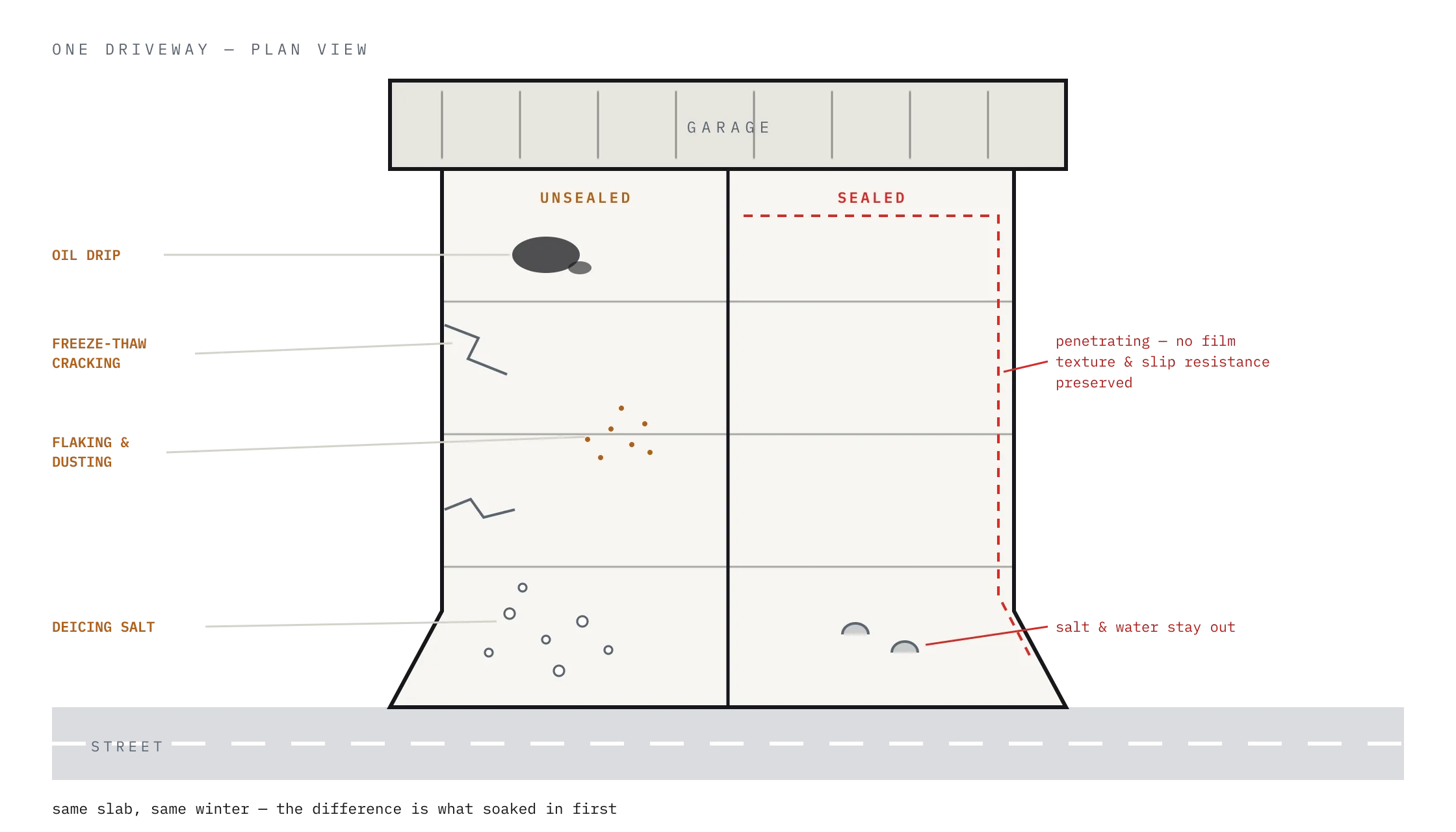
One driveway, two halves: sealed vs. unsealed
On the unsealed half: oil drips soak in, freeze-thaw cracking, flaking and dusting, and de-icing salt damage. On the sealed half: the penetrating treatment leaves no film, texture and slip resistance are preserved, and salt and water stay out. Same slab, same winter — the difference is what soaked in first.
Sealed from within
Driveway Sealer penetrates the slab and works inside it — sealing, densifying, and strengthening the internal bonds of the concrete so the surface resists cracking and spalling as a more solid slab. There’s no film to scratch, peel, or refresh: the protection is permanent, it dries completely clear, and because nothing sits on top of the surface, your concrete’s natural texture and slip resistance stay intact — unlike an acrylic or epoxy sealer.
What it does for the slab
| Function | What it means outside |
|---|---|
| GRIPS | Maintains your concrete’s slip resistance — unlike acrylic or epoxy film sealers |
| ENDURES | Excellent freeze-thaw resistance — built by a Wisconsin company that lives it |
| SHIELDS | Prevents salt penetration before it damages the slab |
| DENSIFIES | Strengthens internal bonds — reduced cracking and spalling |
| WEARS | Abrasion resistance against vehicles, foot traffic, and the elements — less flaking and dusting |
Built where winter is a fact

Tap to enlarge
A year on your driveway
Winter brings plow salt and freeze-thaw cycles; spring brings melt, rain, and water everywhere; summer brings traffic wear, sun, and the elements; fall brings leaf litter, and mold wipes right off. Sealed once — protected through all of it.
Bone Dry is headquartered in Wisconsin — we know exactly what the freeze-thaw cycle does to outdoor concrete, because ours goes through it too. Water that soaks into an unsealed slab expands every time it freezes, and deicing salt accelerates the damage. Driveway Sealer keeps both out of the slab. And when fall leaves an organic mess behind, surface mold growth wipes off easily instead of rooting into open pores.
Penetrating vs. film — the honest comparison
Tap to enlarge
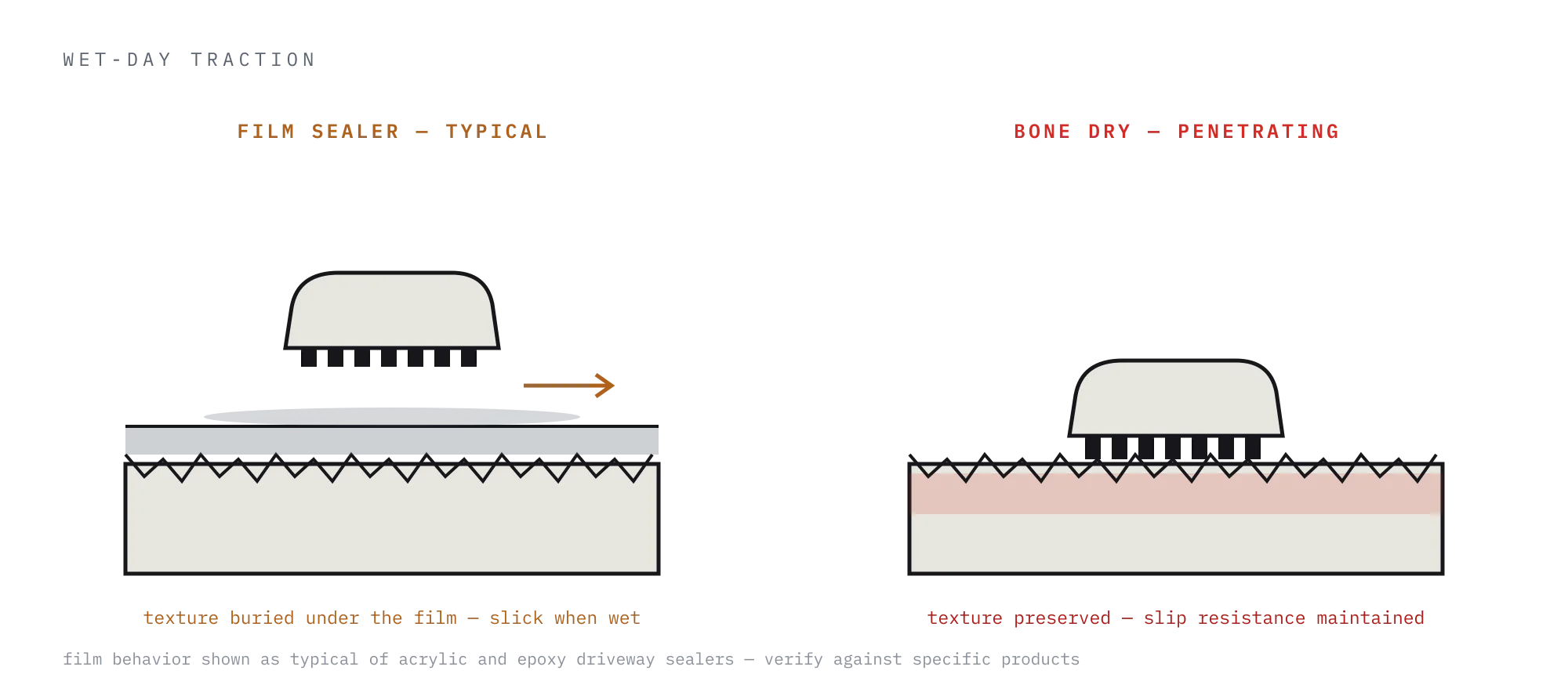
Wet-day traction: film vs. penetrating
A typical film-forming driveway sealer buries the concrete’s texture under the film — slick when wet. Bone Dry’s penetrating sealer preserves the texture, so slip resistance is maintained. (Film behavior shown as typical of acrylic and epoxy driveway sealers — verify against specific products.)
| Bone Dry Driveway Sealer | Typical film sealer* | |
|---|---|---|
| Where it lives | Inside the slab — penetrating | On top — a surface film |
| Appearance | Dries clear — concrete looks like concrete | Gloss or sheen changes the look |
| Slip resistance | Maintained — texture untouched | Film can be slick, especially wet |
| Lifespan | Permanent | Wears and peels — recoat cycle |
| Application | Battery or pump garden sprayer | Roller or squeegee, strip before recoat |
*Typical published characteristics of acrylic and epoxy film-forming driveway sealers. Verify against specific products.
Which product does your surface need?
| Your surface | Use |
|---|---|
| Concrete driveway, patio, or sidewalk at home | Bone Dry Driveway Sealer |
| Commercial lots, parking structures, warehouses | Bone Dry Structural Sealer |
| Interior slab going under flooring | Bone Dry Original, Plus, or Pro |
| Asphalt (blacktop) driveway | Not a Bone Dry product — sealers break down asphalt’s petroleum base |
Application
Tap to enlarge
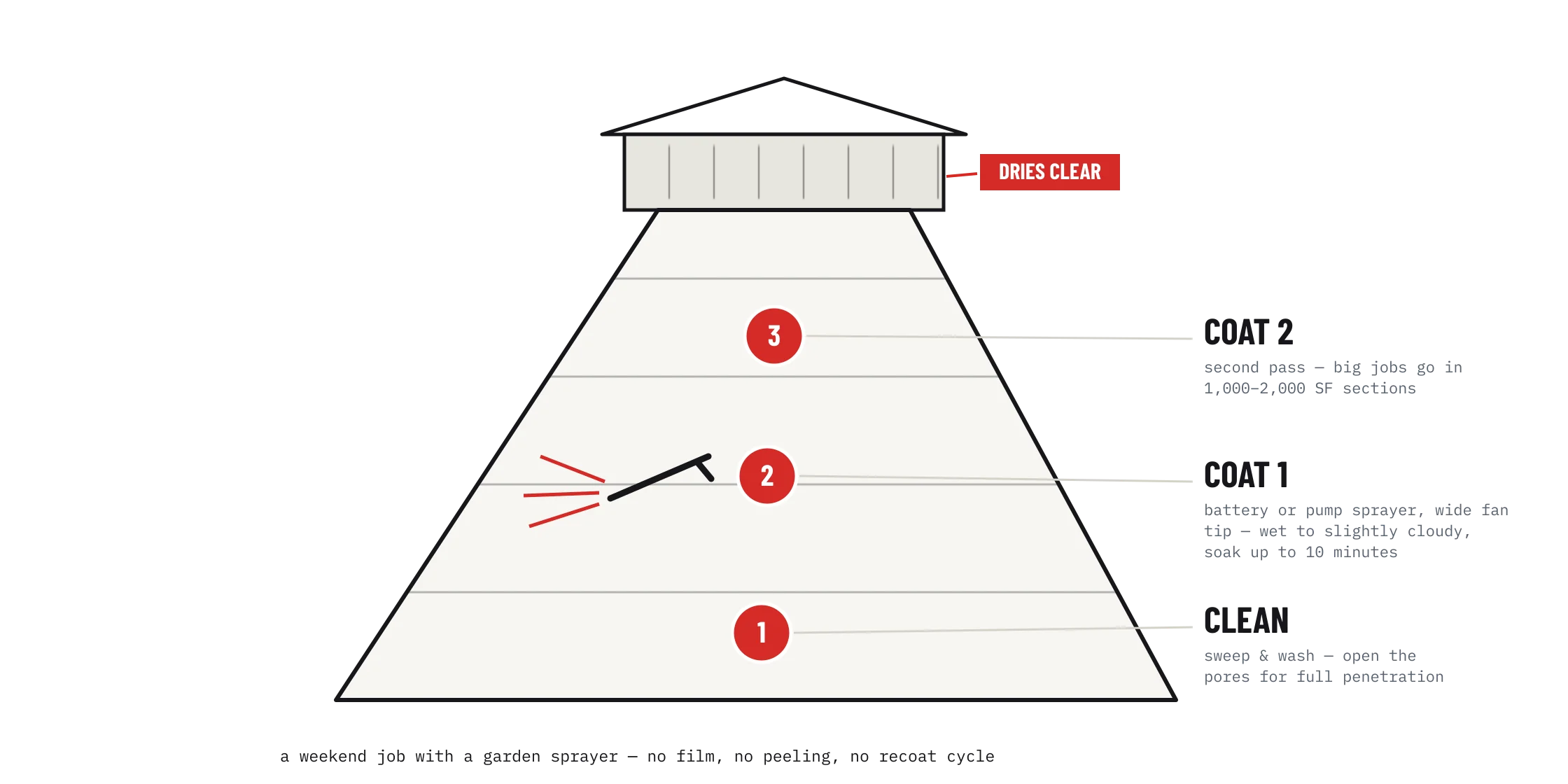
Application steps
- Clean — sweep and wash to open the pores for full penetration.
- Coat 1 — battery or pump sprayer with a wide fan tip; wet to slightly cloudy; let soak up to 10 minutes.
- Coat 2 — second pass; big jobs go in 1,000–2,000 SF sections.
Dries clear. A weekend job with a garden sprayer — no film, no peeling, no recoat cycle.
Good to know: anyone can do this with a battery or pump sprayer. Clean the surface first so the sealer penetrates fully, spray the first coat with a wide fan tip until the surface looks wet to slightly cloudy, let it soak up to 10 minutes, then apply the second coat — sectioning large jobs into 1,000–2,000 square feet keeps you organized. If the pail freezes, thaw and agitate before use. Keep the spray off aluminum, glass, and your eyeglasses (it etches them), expect leather shoes and gloves to stiffen, and know that some glazed tile will dull. The sealer is slightly corrosive — handle as a caustic solution with goggles or a face shield, rubber or plastic gloves, and a NIOSH-approved respirator in confined areas.
Technical data
| Type | Permanent penetrating concrete sealer and densifier |
| Finish | Dries clear — slip resistance maintained |
| VOC | VOC-free |
| Protects against | Freeze-thaw damage, salt penetration, abrasion, flaking and dusting, cracking and spalling |
| Mold | Surface mold growth is easily removed |
| Surfaces | Outdoor concrete: driveways, patios, sidewalks. Not for asphalt. |
| Application | Battery or pump sprayer, wide fan tip; 2 coats, soaking up to 10 minutes between |
| Safety | Slightly corrosive — goggles or face shield, gloves; NIOSH respirator in confined areas; see SDS |
Measure your driveway. Send us the square footage and we’ll tell you exactly how much you need — call 262-694-9748 or email [email protected].
FAQ
Does Bone Dry Driveway Sealer dry clear?
Yes, Bone Dry Driveway Sealer dries clear.
How do I apply Bone Dry Driveway Sealer?
Sweep and wash the concrete first so the sealer penetrates fully. Spray the first coat with a battery or pump sprayer and a wide fan tip until the surface looks wet to slightly cloudy, let it soak in for up to 10 minutes, then apply the second coat. Work large jobs in 1,000 to 2,000 square foot sections. It dries clear.
Will it make my driveway slippery?
No. Driveway Sealer penetrates the slab instead of leaving a film, so the concrete's natural texture and slip resistance are preserved. Acrylic and epoxy film sealers can be slick, especially when wet.
Can I use it on an asphalt driveway?
No. Bone Dry sealers are for concrete; they break down asphalt's petroleum base. There is no Bone Dry product for asphalt.
Does it protect against deicing salt and freeze-thaw damage?
Yes. It seals and densifies the slab from within so water and salt stay out, which breaks the freeze-thaw cycle that causes cracking, spalling, flaking, and dusting.
How often do I need to reapply it?
You don't. The protection is permanent because the treatment becomes part of the concrete; there is no film to scratch, peel, or refresh, and no recoat cycle.
Can I use it on a patio or sidewalk?
Yes. Driveway Sealer is made for outdoor residential concrete: driveways, patios, and sidewalks. Commercial lots, parking structures, and warehouses take Bone Dry Structural Sealer.
How much Driveway Sealer do I need?
Coverage depends on the porosity of the concrete and the two-coat application. Measure the driveway, send us the square footage, and we will tell you exactly how much you need.
Specifications
Read about the specifications here.
Additional information
| Weight | N/A |
|---|---|
| Dimensions | N/A |
| Size | 1 Gallon, 5 Gallon |