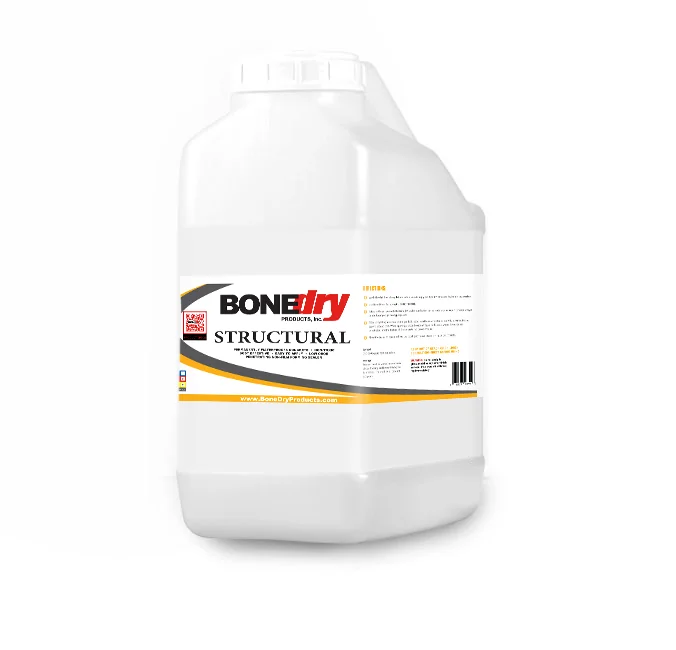
Bone Dry Structural Sealer
Price range: $125.00 through $495.00
Bone Dry Structural Concrete Sealer provides a single-application, VOC-free permanent penetrating solution for concrete, designed specifically for exposed exterior surfaces like sidewalks, parking structures, driveways, and other exterior concrete surfaces. This innovative product delivers long-lasting protection for exterior surfaces by protecting against chloride and freeze/thaw deterioration.
Use
- Outdoor
Product Info
- One-time use
- VOC-free
- Permanent
Important Documents
Description
Exterior concrete doesn’t fail all at once — it fails one winter at a time. Water soaks in, freezes, expands, and pops the surface, and every new crack drinks more water than the last. Bone Dry Structural Sealer breaks that cycle at step one: a single-application, VOC-free, permanent penetrating sealer that keeps water and deicing salts out of exposed concrete for good.
Tap to enlarge
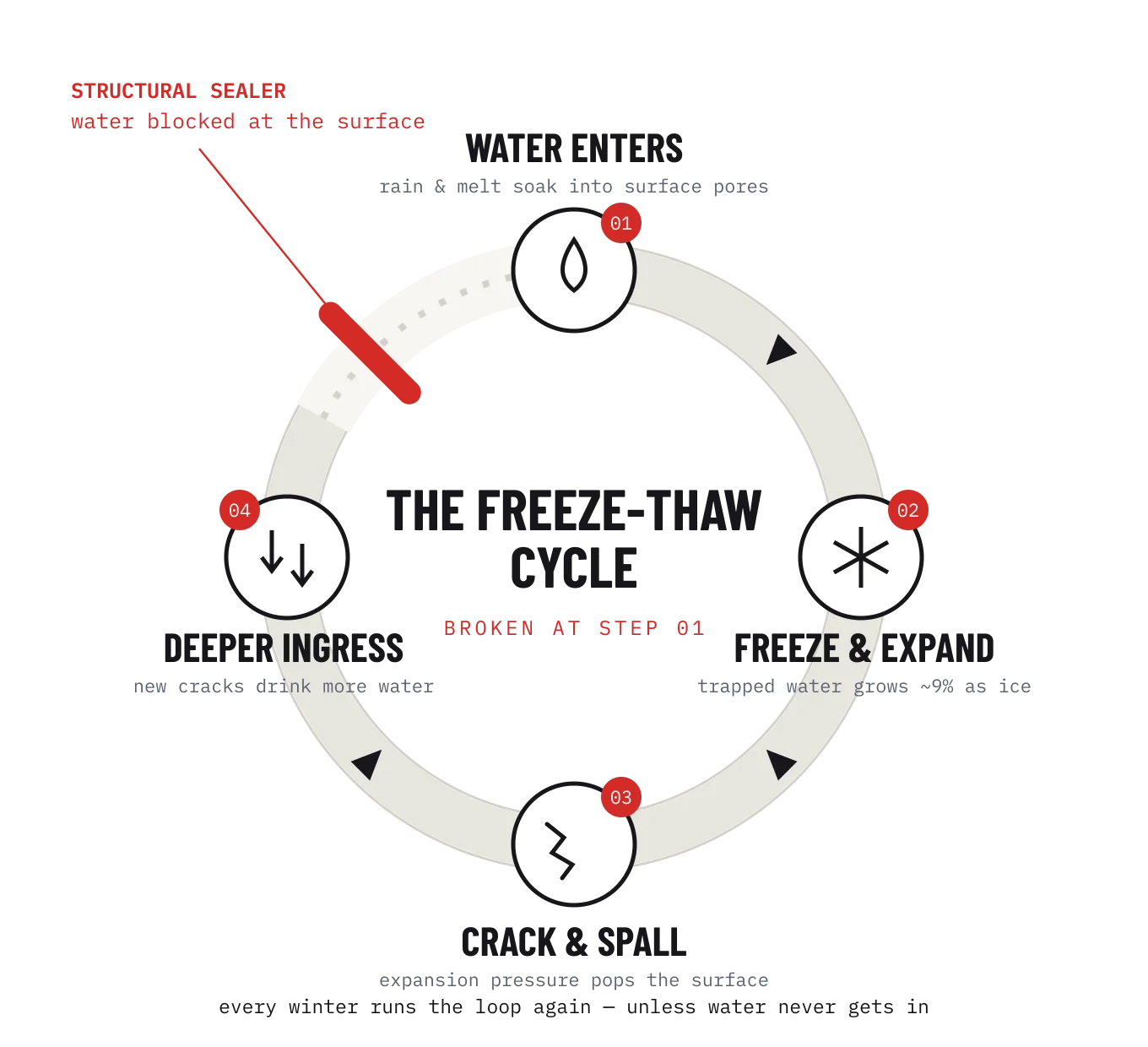
The freeze-thaw cycle — broken at step one
Freeze-thaw damage runs a loop: water enters as rain and melt soak into surface pores; trapped water freezes and expands about 9% as ice; expansion pressure cracks and spalls the surface; and the new cracks drink in even more water. Every winter runs the loop again — unless water never gets in. Structural Sealer blocks water at the surface, breaking the cycle at step one.
Cure and seal in one application
On new exterior flatwork, Structural Sealer functions as the curing compound — cured and permanently sealed in the same pass, no second mobilization. On existing sidewalks, lots, and decks, the same single application penetrates the surface and becomes part of the concrete. There’s nothing on top to wear off, so there’s nothing to strip and nothing to recoat.
What it does for the slab
| Function | What it means outside |
|---|---|
| CURES | Functions as a curing compound on new flatwork — cure and seal in a single application |
| SEALS | Permanent penetrating protection that becomes part of the concrete |
| TOUGHENS | Boosts abrasion resistance for wheel and foot traffic |
| ENDURES | Improves freeze-thaw durability — minimizes cracking and spalling |
| BLOCKS | Stops salt intrusion that corrodes embedded steel |
| CLEANS | Makes mold removal effortless — surfaces stay presentable with minimal effort |
A note on ASTM C-309: C-309 covers liquid membrane-forming curing compounds. Structural Sealer penetrates the slab instead of forming a membrane, so the standard doesn’t apply to it — used standalone, it achieves the results a curing compound achieves. Where a specification requires C-309 by name, a dissipating curing compound can be applied after the Structural Sealer is applied.
Water beads. Salt stays on top.
Tap to enlarge
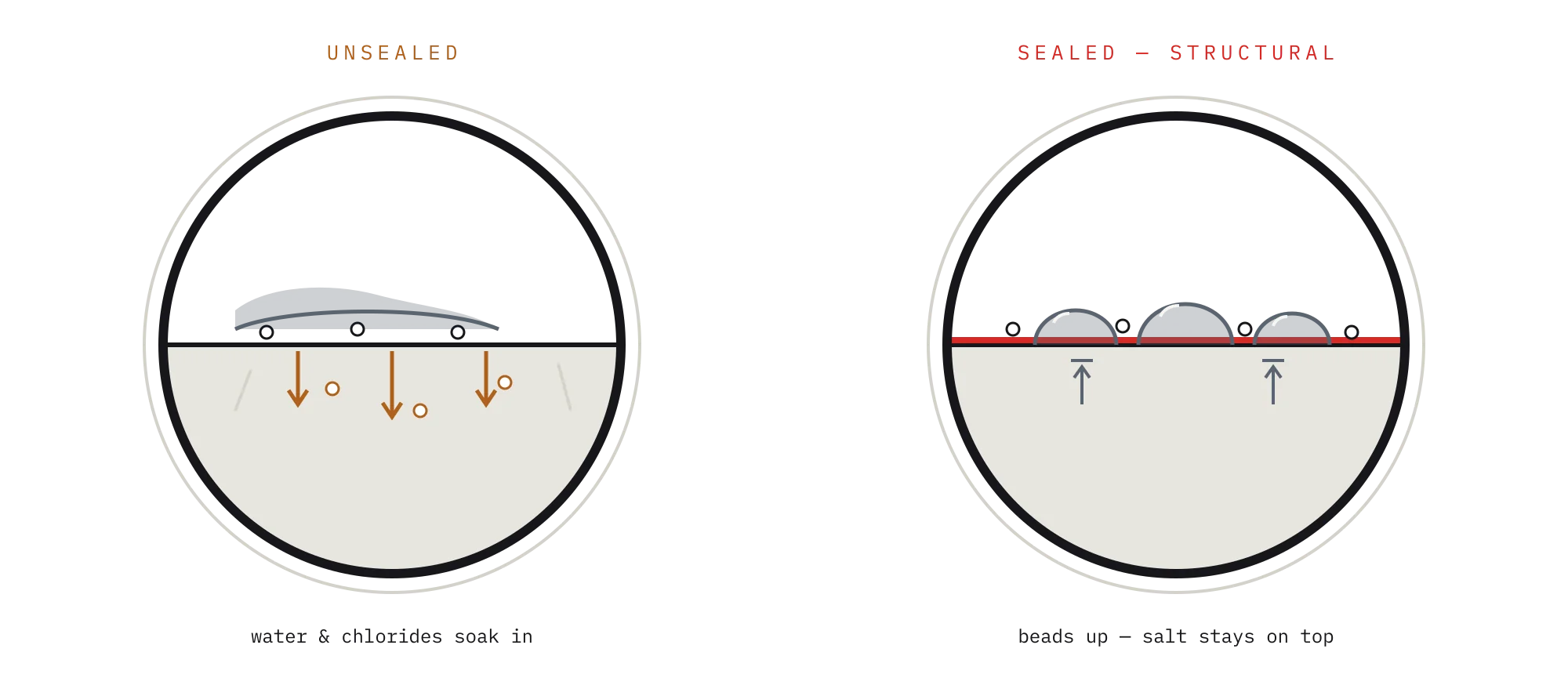
Unsealed vs. sealed: water and chlorides
On unsealed concrete, water and chlorides soak in. On concrete sealed with Structural Sealer, water beads up and de-icing salt stays on top of the surface instead of entering the slab.
Deicing salts are the slow poison of northern concrete: dissolved chlorides ride water into the slab, attack embedded steel, and accelerate scaling. Structural Sealer closes the door. Water beads instead of soaking, chlorides stay on the surface where the next rain or rinse carries them away, and the reinforcement below stays out of the fight entirely.
Versus film-forming cure & seals
| Structural Sealer | Typical acrylic film | |
|---|---|---|
| Protection lives | In the slab — penetrating | On the slab — surface film |
| Appearance | Natural, unchanged | Gloss film; can yellow or whiten |
| Wear | Can’t peel, flake, or wear off | Wears in traffic lanes; peeling risk |
| Hot-tire pickup | None | Possible |
| Slip when wet | Traction unchanged | Film can be slippery |
| Maintenance | One application — permanent | Strip and recoat every 1–3 years |
| VOC | VOC-free | Solvent versions often high-VOC |
Comparison reflects typical published characteristics of film-forming acrylic cure-and-seal products. Verify against project-specific data.
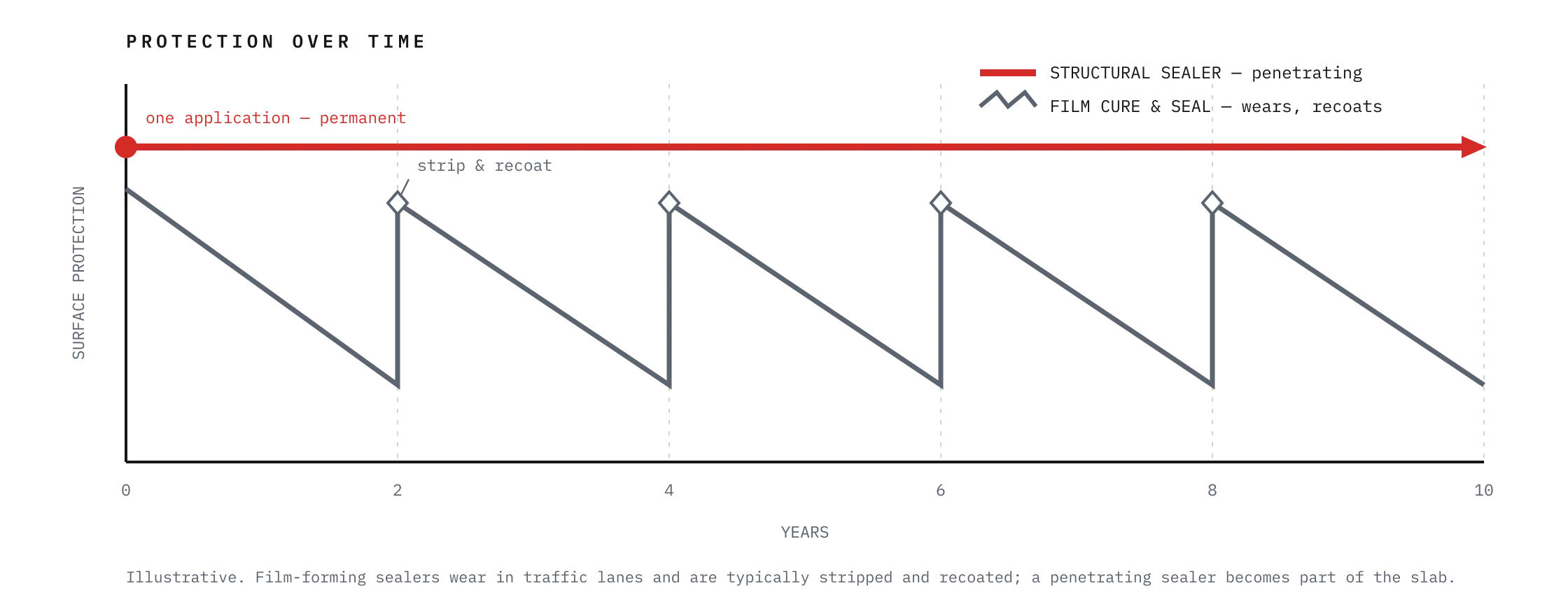
Tap to enlarge
Protection over time: penetrating vs. film-forming sealers
Film-forming cure-and-seal products wear in traffic lanes and are typically stripped and recoated on a roughly two-year cycle. Structural Sealer is a penetrating sealer: one application is permanent because the treatment becomes part of the slab rather than a film on top of it. (Illustrative comparison.)
Where to use it
Built for exposed structural concrete, interior and exterior, in high-traffic commercial service:
- Sidewalks, plazas, and walkways
- Parking lots, parking structures, and garages
- Driveways, patios, and outdoor slabs
- Warehouses and distribution centers
- Curbs, approaches, and other exposed flatwork
Application
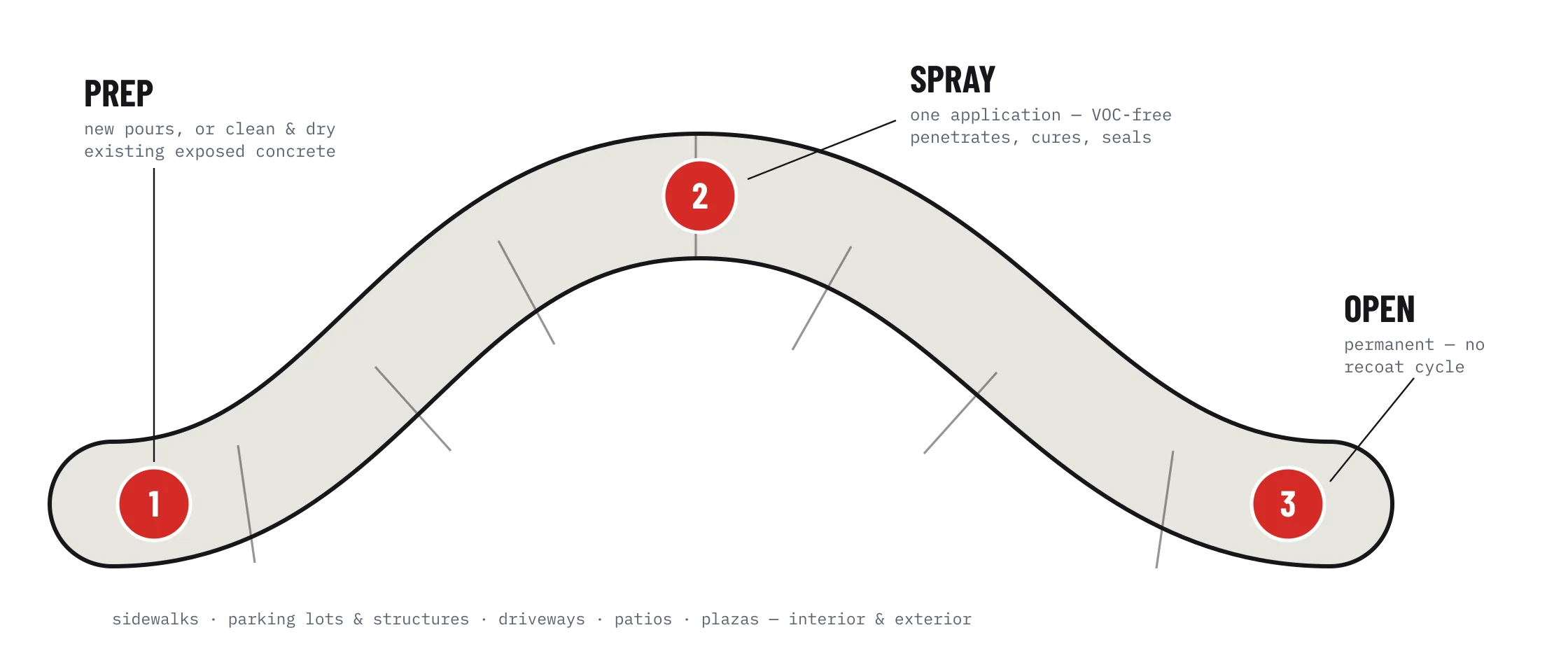
Tap to enlarge
Application steps and where to use it
- Prep — new pours, or clean and dry existing exposed concrete.
- Spray — one application; VOC-free; penetrates, cures, seals.
- Open — permanent protection with no recoat cycle.
For sidewalks, parking lots and structures, driveways, patios, and plazas — interior and exterior.
Good to know: one application does the job on new pours or clean, dry existing concrete — on fresh flatwork it functions as the curing compound, so no separate one is needed — where a spec requires ASTM C-309, a dissipating curing compound can be applied after Structural Sealer. Shield adjacent finished surfaces, glass, and vegetation from overspray.
Technical data
| Type | Permanent penetrating sealer |
| Compliance | Functions as a curing compound (penetrating — not membrane-forming, so C-309 doesn’t apply). Where C-309 is specified, a dissipating curing compound can be applied after the Structural Sealer |
| VOC | VOC-free |
| Application | Single application — no recoat cycle |
| Use | Interior and exterior exposed concrete |
| Freeze-thaw | Improved durability; minimizes cracking and spalling |
| Salt intrusion | Blocked — protects embedded steel from chloride corrosion |
| Maintenance | Mold removal effortless; nothing to strip or recoat |
Protect the flatwork before winter does its work. Send us the square footage and exposure and we’ll size the order — or quote application. Call 262-694-9748 or email [email protected].
FAQ
Where is Bone Dry Structural Sealer used?
On exposed structural concrete, new or existing: parking lots and parking structures, plazas, sidewalks, curbs, and warehouses. Commercial exterior flatwork of any size.
Does Structural Sealer work as a curing compound on new concrete?
Yes. One application on fresh flatwork cures and seals in a single pass. ASTM C-309 covers membrane-forming curing compounds and does not apply to a penetrating sealer; where a specification names C-309, a curing compound can be used after the structural sealer is applied.
How often does it need to be reapplied?
It doesn't. One application is permanent because the treatment becomes part of the concrete. Film-forming acrylic cure-and-seals are typically stripped and recoated every one to three years; Structural Sealer has nothing to strip and nothing to recoat.
Will it make the surface slippery?
No. It penetrates instead of leaving a film, so traction is unchanged, there is no hot-tire pickup, and the concrete keeps its natural appearance.
Does it protect against deicing salt?
Yes. Water beads on the surface and salt stays on top instead of entering the slab, which breaks the freeze-thaw cycle and keeps chlorides away from the concrete.
How is Structural Sealer applied?
On existing concrete, clean and dry the surface first, degreasing any oil stains. Spray one application; it penetrates, cures, and seals. On fresh flatwork it functions as the curing compound. Shield adjacent finished surfaces, glass, and vegetation from overspray.
Structural Sealer or Driveway Sealer?
Driveway Sealer is made for residential driveways, patios, and sidewalks. Structural Sealer is the commercial product for parking lots, parking structures, plazas, and other exposed flatwork, and it doubles as the curing compound on new pours.
Can I use it under flooring?
Structural Sealer is for exposed concrete. Slabs going under flooring take Bone Dry Original, Plus, or Pro, which are formulated for moisture mitigation beneath floor coverings.
Specifications
Read about the specifications here.
Additional information
| Weight | N/A |
|---|---|
| Dimensions | N/A |
| Size | 1 Gallon, 5 Gallon |