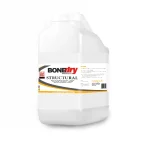


Bone Dry Original
Price range: $75.00 through $305.00
Bone Dry Products’ Original Sealer. Waterproofs, densifies, prevents cracking, and prevents salts.
Key Features
- Dries in 18–24 hours before finished flooring. Need it faster? Add Quick Dry to your order and flooring can be installed 6 hours after application.
- Protects against damage from freeze/thaw cycles.
- Extends the life of the concrete slab.
- Prevents additional cracking, spalling, and chetting on the concrete surface.
- Protects against concrete moisture vapor emissions.
Use
- Indoor
- Outdoor
Coverage
- 200–250 sq ft per gallon on broom-troweled concrete; 300–350 on mechanically troweled; 350–450 on heavily burnished or polished slabs opened with Etch-a-Crete
Product Info
- Prevents penetration of salt and other contaminants
- Prevents dusting
- Seals and creates a barrier below the surface
- Eliminates moisture emission from below
- Protects against damage from freeze/thaw cycles
- Extends the life of the concrete slab
- Prevents additional cracking, spalling, and chetting on the concrete surface
- Protects against concrete moisture vapor emissions
Benefits
- Indoor & Outdoor Applications
- Sealing Concrete Subfloors
- DIY Projects
Important Documents
Description
Bone Dry Original wasn’t designed for your garage. It was designed for hazardous waste. The namesake of the whole line was originally developed to seal concrete for hazardous waste containment — a job where “mostly waterproof” isn’t a grade. That same chemistry has spent more than 35 years on countless subfloors since: a penetrating, permanent, non-toxic sealer that fills the pores of the slab and puts a strong vapor barrier between the ground and everything you build on top of it.

Tap to enlarge
The origin: hazardous waste containment chemistry
Bone Dry Original began in hazardous waste containment — sealed containment where nothing gets through. Today the same chemistry seals your subfloor: the same seal, under the carpet instead of the drums. Built to contain the worst, and proven on countless subfloors since.
Overqualified on purpose
Original penetrates the surface and seals the porous areas of the slab from within — there’s no film on top, nothing to peel, and the concrete looks unchanged. It also works as a densifier, reacting with the free lime left over from curing to produce a harder, denser surface. The result is a permanent, impermeable barrier that stops moisture from ever rising to the surface, eliminates the causes of concrete sweating, and shields the slab against the penetration of salt, alkalis, and oils.
Waterproof concrete floor sealer
Bone Dry Original is a waterproof concrete floor sealer that works from inside the slab rather than as a coating on top of it. Weighing sealer types first? Start with our guide to the best concrete sealer for floors and slabs.
What it does for the slab
| Function | What it means for the floor |
|---|---|
| SEALS | Permanent waterproof vapor barrier — born in hazardous waste containment |
| STOPS SWEATING | Eliminates the causes of concrete sweating and moisture vapor emissions |
| DENSIFIES | Reacts with free lime for a harder, denser, more durable surface |
| SHIELDS | Blocks the penetration of salt, alkalis, and oils |
| ENDURES | Freeze-thaw protection; extends the life of the slab |
What moisture ruins

Tap to enlarge
What moisture ruins
Buckling wood, curling vinyl, peeling carpet, bubbling paint — all four start as moisture vapor. Original stops it at the slab.
Buckling wood, curling vinyl, peeling carpet, bubbling paint — four different failures with one shared cause: vapor rising through unprotected concrete. Moisture emulsifies and weakens the water-, latex-, and acrylic-based adhesives under flooring, feeds organic growth beneath mats and non-permeable coverings, and even wicks into cardboard stored on the floor until it loses its strength. Seal the slab once and the whole failure chain never starts.
The epoxy alternative — at a fraction of the cost
| Bone Dry Original | Epoxy sealants* | |
|---|---|---|
| Cost | Up to 4× more affordable | Premium pricing |
| Application | Standard garden sprayer — anyone can do it | Multi-step, often professional |
| Cure | 18–24 hours before finished flooring; 6 hours with Quick Dry | Slow cure windows |
| Where it lives | Inside the slab — can’t peel | A film on top |
| Appearance | Concrete looks unchanged | Changes the floor |
*Typical published characteristics of epoxy floor sealants. Verify against specific products.
Not sure it’s a vapor problem? Test it this weekend

Tap to enlarge
The plastic-sheet test: find out in 48 hours
Tape a 2×2-ft plastic square to dry concrete, leave it for 48 hours, then lift it and look underneath. Beads underneath mean vapor is rising — seal the slab. Bone dry underneath means it’s room humidity — ventilate. Beads mean the slab needs sealing, not the room dehumidifying.
Tape a 2×2-foot square of plastic sheeting to a dry patch of your slab, leave it for 48 hours, then lift it. Beads of moisture underneath mean vapor is coming up through the concrete — a faulty or missing vapor barrier — and the slab needs sealing. If it’s bone dry under the plastic, your moisture is coming from the room’s humidity instead, and ventilation is the fix. Two days, zero cost, and you’ll know exactly which problem you have.
Which Bone Dry does your slab need?
| Your situation | Use |
|---|---|
| Standard slab under flooring — home, garage, most projects | Bone Dry Original |
| Mold-prone basement or hygiene-critical facility | Bone Dry Plus — Original + antimicrobial |
| Large commercial pour — cure + seal in one, warranty program | Bone Dry Pro |
| Outdoor driveway, patio, or sidewalk | Bone Dry Driveway Sealer |
| CMU block, shotcrete, or gunite | Bone Dry Block Wall first, then Original or Plus |
Application

Tap to enlarge
Application steps
- Spray — pump or battery sprayer with a wide fan tip; one coat until the slab looks wet to slightly cloudy, then within 10 minutes a second coat only where the first penetrated.
- Dry — 18–24 hours before finished flooring; vacuum or hand-scrape any loose particles once dry.
- Floor — after 18–24 hours, or 6 hours with Quick Dry.
Everything ships in the pail — Quick Dry comes premixed, no process change.
Good to know: apply one coat with a pump or battery sprayer and a wide fan tip (a squeegee or heavy-nap roller at the edges) until the slab looks wet to slightly cloudy. After completing a section, let it sit no more than 10 minutes, then apply a second coat only where the sealer has penetrated and the concrete texture is visible again. At the pour, once the surface is hard enough to walk on without indentations, one coat at 50% overlap is all that is required. Allow 18–24 hours of drying before finished flooring goes down — or 6 hours with Quick Dry, which ships premixed in your pail with no change to how you apply. Once dry, the slab may look cloudy where product has solidified on the surface, and contaminants from inside the slab may rise as well; remove any loose particles with a vacuum or hand scraper before flooring. Coverage is 200–250 square feet per gallon on broom-troweled concrete, 300–350 on mechanically troweled concrete, and 350–450 on heavily burnished or polished slabs opened with Etch-a-Crete. Mask cabinetry, glass, finished metal and painted surfaces with plastic up to 2 feet from the concrete; overspray can be removed with concentrated vinegar. Like all Bone Dry sealers, Original is slightly corrosive: goggles or a face shield, rubber or plastic gloves, and a NIOSH-approved respirator in confined areas.
Technical data
| Type | Permanent penetrating concrete sealer and densifier, non-toxic |
| Origin | Developed for hazardous waste containment; the chemistry has been in service for 35+ years |
| Coverage | 200–250 sq ft/gal broom-troweled · 300–350 mechanically troweled · 350–450 burnished/polished opened with Etch-a-Crete |
| Dry time | 18–24 hours before finished flooring; 6 hours with the Quick Dry option (ships premixed) |
| Appearance | Concrete looks unchanged after application |
| Climates | Extremely effective in all temperate climates |
| Flooring | Adhered systems: hardwood, vinyl, tile, broadloom carpet, carpet tile, sheet goods, luxury vinyl, VCT, and more |
| Limitations | Not for existing decorative exposed aggregate or stained concrete (discoloration may occur). Leveling products must be cement-based, minimum 4,000 psi at 28 days; Gyp-Crete is prohibited with this product |
| Storage | Above freezing and below 90°F; shelf life 2 years |
| Moisture & pH protection | Protects finished flooring, coatings, and adhesives from slabs at up to 100% relative humidity (RH) and calcium chloride readings reaching 25 lbs., and neutralizes high pH in concrete |
| Aftercare | Allow 18–24 hours (6 with Quick Dry); remove loose particles with a vacuum or hand scraper before finished coatings go down |
| Safety | Slightly corrosive — goggles or face shield, gloves; NIOSH respirator in confined areas; see SDS |
Sealing before flooring? Send us the square footage and we’ll size the order — call 262-694-9748 or email info@bonedryproducts.com.
FAQ
Will Bone Dry Original make my concrete slippery?
No. Our penetrating concrete floor sealers will not make your concrete surface more slippery.
Can I apply a concrete floor sealer to an already-painted surface?
No. Paint is a surface coating, and existing concrete with prior surface coatings must be mechanically profiled to a minimum CSP 2 before Bone Dry Original is applied, so the sealer can penetrate the concrete.
Can I apply a penetrating concrete floor sealer over an existing sealer?
No, you should not apply a penetrating concrete floor sealer over an existing sealer. The old sealer must be removed first to allow the new sealer to penetrate the concrete surface.
How much Bone Dry Original do I need?
Coverage is 200–250 square feet per gallon on broom-troweled concrete, 300–350 on mechanically troweled concrete, and 350–450 on heavily burnished or polished slabs opened with Etch-a-Crete. On existing concrete, apply one coat so the slab looks wet to slightly cloudy; after completing a section, let it sit no more than 10 minutes, then apply a second coat only where the sealer has penetrated and the concrete texture is visible again. At the pour, one coat at 50% overlap is all that is required.
How soon can I install flooring after applying Bone Dry Original?
Allow 18–24 hours of drying before finished flooring. With the Quick Dry option, premixed in the pail, flooring can go down in 6 hours. Once dry, the slab may look cloudy where product has solidified on the surface; remove any loose particles with a vacuum or hand scraper, then install the flooring.
Does Bone Dry Original work on an existing slab, or only on new concrete?
Both. Newly cured concrete needs no wait time: scrape, buff, or broom sweep construction debris off first, and open a heavily burnished or polished slab with Etch-a-Crete or mechanical profiling. Existing concrete with prior coatings must be mechanically profiled to a minimum CSP 2; slabs with known moisture issues or over 10 years old must then receive a cement-based top coating before the sealer goes on.
Should I use Bone Dry Original or Bone Dry Plus?
Both give the same permanent penetrating seal at the same coverage. Choose Plus where mold, mildew, or musty odors are a concern, such as a damp basement or a hygiene-critical floor; it carries antimicrobial protection that keeps working for the life of the seal. Original is right for a standard slab without a growth problem.
How do I know if moisture is coming through my concrete?
Tape a 2-by-2-foot square of plastic sheeting to a dry patch of the slab and leave it for 48 hours. Beads of moisture underneath mean vapor is rising through the concrete and the slab needs sealing. A dry patch under the plastic means the moisture is coming from room humidity, and ventilation is the fix.
Additional information
| Weight | N/A |
|---|---|
| Dimensions | N/A |
| Size | 1 Gallon, 1 Gallon with Quick Dry, 5 Gallon, 5 Gallon with Quick Dry |